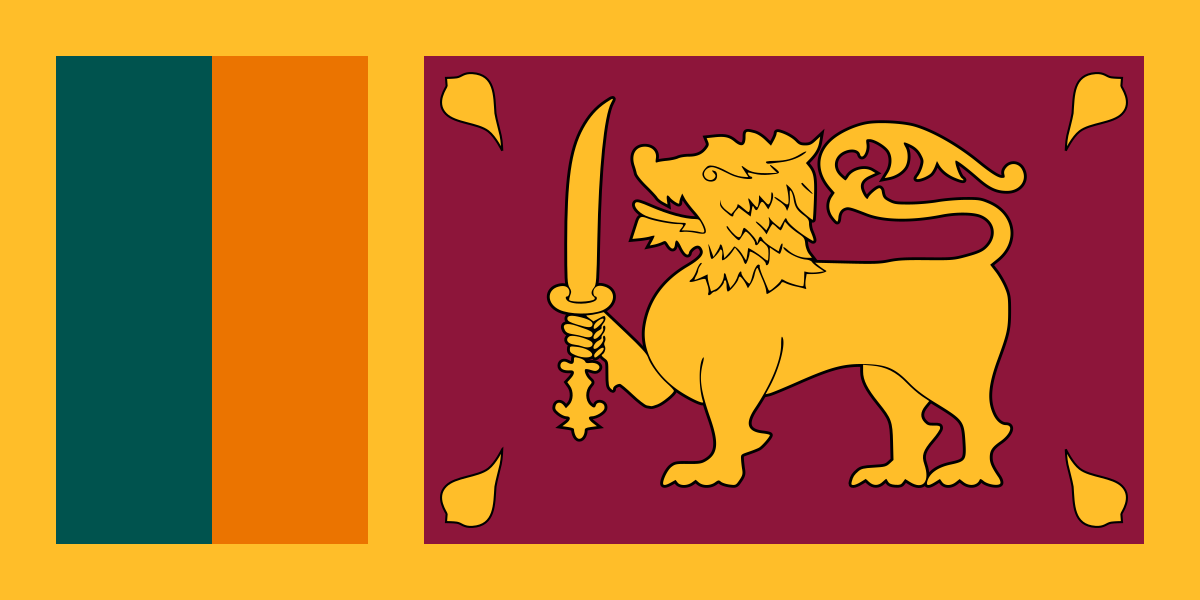
Vesak Full Moon Poya Day in Sri Lanka
Vesak Full Moon Poya Day, celebrated in Sri Lanka, is a festival of immense importance for Buddhists around the globe. This day commemorates the birth, enlightenment (Buddhahood), and death (Parinibbana) of Lord Buddha. It's a time when the entire island comes alive with lanterns, decorations, and various religious activities. The significance of Vesak lies not just in its religious connotations but also in the way it brings people together, fostering a spirit of peace, reflection, and community.
The festival falls on the full moon of the lunar month of Vesakha, which usually occurs in May. This alignment with the lunar calendar makes the exact date of Vesak vary from year to year. In Sri Lanka, Vesak Full Moon Poya Day is a public holiday, allowing everyone to participate in the festivities and religious observances. The government and various organizations also support the event by organizing free public services and events, making it a national festival that transcends religious boundaries.
Historical and Religious Significance
Vesak Full Moon Poya Day holds a deep historical and religious significance for Buddhists. It marks three major events in the life of Gautama Buddha—the founder of Buddhism—that shaped the religion's core teachings and practices. The first event is the birth of Prince Siddhartha Gautama, who later became the Buddha, in Lumbini. The second event is his attainment of Enlightenment under the Bodhi tree in Bodh Gaya, after years of meditation and search for truth. The third and final event commemorated on this day is the Buddha's Parinibbana, or death, at Kushinagar, which marked the end of his cycle of birth and rebirth, attaining Nirvana.
The celebration of Vesak is a reflection of the deep respect and devotion that Buddhists have for Lord Buddha and his teachings. It is a day to remind oneself of the importance of peace, compassion, and kindness towards all beings. Devotees engage in various religious practices such as observing Sil (observing precepts), meditation, and participating in religious ceremonies at temples. The day is also marked by acts of charity, such as giving to the poor and sharing meals with others, embodying the Buddha's teachings on generosity and compassion.
Traditions and Celebrations
In Sri Lanka, Vesak is celebrated with great fervor and zeal. The streets, homes, and public spaces are adorned with colorful lanterns, decorations, and pandals (thematic and illuminated displays depicting scenes from the Buddha's life). These decorations not only beautify the surroundings but also serve as a reminder of the light of the Buddha's teachings that dispel the darkness of ignorance and suffering.
Another significant tradition is the preparation and display of Vesak lanterns. These lanterns, ranging from simple handmade designs to elaborate creations, are hung in front of homes, along streets, and in temples. The act of making and displaying lanterns is a communal activity that brings families and communities together, fostering a sense of unity and shared purpose. Additionally, 'Dansalas' are organized throughout the country, where food, drinks, and refreshments are offered to the public for free, exemplifying the spirit of giving and generosity that is central to Vesak celebrations.
Spiritual Practices and Merit-making
During Vesak Full Moon Poya Day, Buddhists engage in numerous spiritual practices to gain merit and progress on their spiritual path. Observing Sil, which involves following eight or ten precepts, is a common practice. These precepts are more stringent than the usual five observed by lay Buddhists and include abstaining from eating after noon, refraining from entertainment, and engaging in meditation and mindfulness practices. Meditation sessions and religious talks are organized in temples, providing devotees with the opportunity to deepen their understanding of Buddhist teachings and practice mental cultivation.
Acts of kindness and charity are also a hallmark of Vesak celebrations. Buddhists believe in the concept of merit-making, where good deeds contribute to one's spiritual growth and future well-being. Donating to charities, helping the needy, releasing captive animals, and other acts of generosity are encouraged. These activities reflect the Buddha's teachings on compassion and selflessness, promoting a sense of communal well-being and harmony.
Cultural Impact and Global Recognition
Vesak Full Moon Poya Day is not only a significant religious event in Sri Lanka but also a cultural festival that showcases the country's rich Buddhist heritage. The celebrations highlight the unity and diversity of Sri Lanka's religious and cultural traditions, bringing together people from all walks of life. Internationally, Vesak has gained recognition as a day of peace and solidarity. In 1999, the United Nations officially recognized Vesak, emphasizing its universal message of peace, compassion, and goodwill towards all beings.
The global acknowledgment of Vesak underscores the relevance of Buddha's teachings in today's world, promoting values such as tolerance, mutual respect, and understanding across different cultures and religions. It serves as a reminder of the potential for harmony and peace that lies in embracing compassionate and mindful living. As Sri Lanka and other Buddhist communities around the world celebrate Vesak, they share these timeless teachings with the broader global community, fostering a sense of interconnectedness and shared humanity.
As we reflect on the significance of Vesak Full Moon Poya Day, it becomes clear that the festival transcends religious boundaries, offering messages of hope, renewal, and enlightenment to all. It is a time for self-reflection, for recommitting oneself to the path of kindness and compassion, and for celebrating the profound impact of Buddha's teachings on humanity. Through its rich traditions, spiritual practices, and acts of generosity, Vesak continues to inspire millions around the world, embodying the universal quest for peace and happiness.