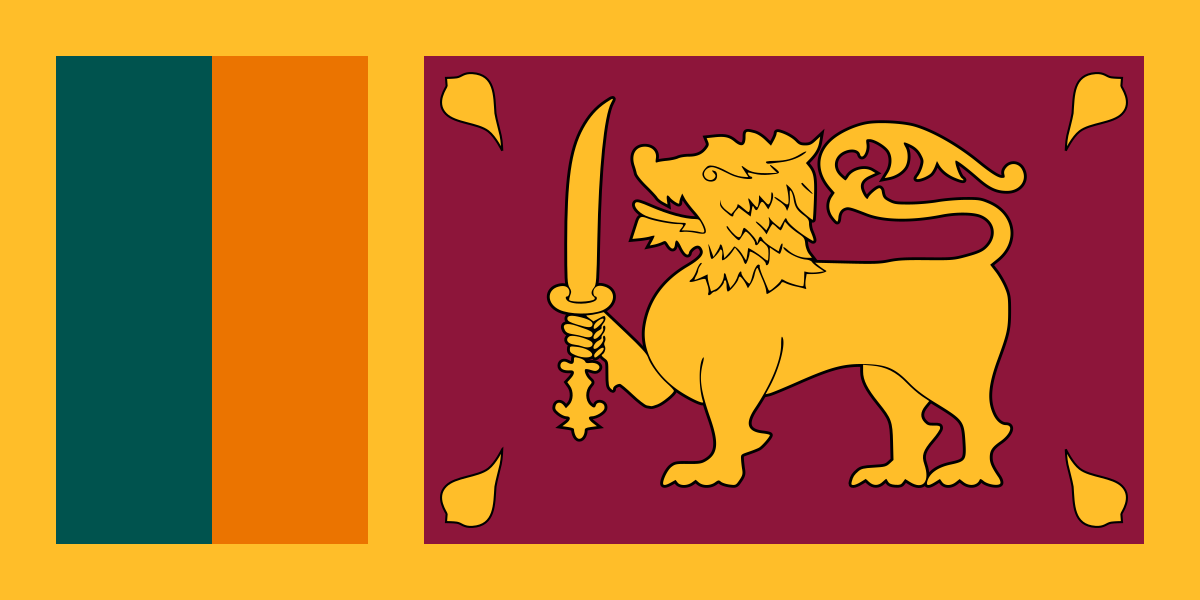
Sinhala and Tamil New Year's Day in Sri Lanka
The Sinhala and Tamil New Year, celebrated in Sri Lanka, is one of the most significant festivals for both Sinhalese and Tamil communities. This festival, known locally as Aluth Avurudda and Puthandu, respectively, marks the end of the old year and the beginning of a new one, coinciding with the sun's movement from Pisces to Aries. It falls in April, a time when the sun directly moves between the Meena Rashi (Pisces) and the Mesha Rashi (Aries), which is considered a period of transition, making it an auspicious time for the New Year celebrations. This unique festival is deeply rooted in astrological beliefs, agriculture, and the cultural heritage of Sri Lanka, making it a vibrant and colorful event that brings together families and communities.
The New Year's celebrations are not just a day's event but a series of rituals and traditions that start several days before the actual New Year and continue for several days after. One of the key aspects of the New Year is the precise timing determined by astrological signs. The celebration begins with the nonagathe or the neutral period, which is a time for reflection and abstaining from all forms of work. It is a moment of quietude before the bustle of the New Year's preparations begins. Following this, the first auspicious activity is usually the lighting of the hearth to cook milk rice, symbolizing prosperity and abundance for the coming year.
The Significance of Rituals and Traditions
The rituals and traditions of the Sinhala and Tamil New Year are steeped in symbolism and have been passed down through generations. These practices are believed to bring good luck, health, and prosperity. One of the most significant rituals is the boiling of milk in a new clay pot which signifies the overflow of wealth. The milk is allowed to boil over, symbolizing prosperity and abundance. Following this, families partake in the first meal of the New Year, a special dish made of milk rice called kiribath, often served with traditional sweets such as kavum (small oil cakes), kokis (crispy cookies), and athirasa (sweet rice cakes).
Another important tradition is the exchange of money, which takes place at an auspicious time. This act symbolizes the sharing of prosperity and the strengthening of bonds among family and friends. The timing for various activities such as eating the first meal, engaging in transactions, and starting work is meticulously calculated based on astrological charts. This attention to timing reflects the deep connection between the festival and cosmic rhythms, showcasing the blend of cultural and astronomical knowledge that characterizes the celebration.
Cultural Performances and Games
The Sinhala and Tamil New Year is also a time for cultural performances and traditional games, which play a crucial role in the festivities. Raban playing, a form of traditional drumming, and folk dances are performed to lively music, adding to the festive atmosphere. These performances are not just entertaining but are also a means of preserving and showcasing Sri Lanka's rich cultural heritage. Traditional games such as kotta pora (a pillow fight), olinda keliya (a game played with seeds of the olinda plant), and muthi gehanuma (a blindfold game) are organized in villages and towns, fostering community spirit and camaraderie among participants and spectators alike.
These games and activities are more than just entertainment; they are a reflection of the agrarian lifestyle that is still prevalent in many parts of Sri Lanka. They emphasize skill, strength, and teamwork, values that are essential in agricultural communities. The New Year's festival provides an opportunity for urban dwellers to reconnect with their rural roots and for the younger generation to learn about traditional customs and values. It is a time when the entire country, irrespective of ethnic or religious differences, comes together in a spirit of renewal and celebration.
Unity and Harmony
The Sinhala and Tamil New Year fosters unity and harmony among Sri Lanka's diverse population. Despite the differences in ethnicity and religion, this festival is celebrated by the majority of Sri Lankans, showcasing the island's multicultural identity. It is a time when people visit relatives and friends, exchange gifts, and extend goodwill. This tradition of visiting and sharing strengthens community bonds and promotes a sense of belonging and togetherness. The New Year period is also marked by acts of charity, where people donate to the less fortunate, reflecting the societal values of compassion and generosity.
In addition to its cultural and social significance, the New Year is an occasion for personal and spiritual reflection. Many Sri Lankans visit temples and kovils to offer prayers, seek blessings for the year ahead, and participate in religious ceremonies. These practices underscore the importance of gratitude, humility, and the pursuit of well-being, not just for oneself but for the community as a whole. The New Year thus serves as a reminder of the shared human values that underpin Sri Lankan society, encouraging people to strive for harmony, understanding, and peace.
The Role of Astrology
Astrology plays a pivotal role in the Sinhala and Tamil New Year celebrations. The timing of various activities, from the lighting of the hearth to the start of work in the New Year, is determined based on astrological calculations. This reliance on astrology highlights the belief in the interconnectedness of the cosmos and human life. It reflects a worldview where celestial movements are thought to influence earthly events, guiding individuals in their actions and decisions. Astrologers are consulted for auspicious times, and their predictions are followed with great reverence, indicating the deep-rooted influence of astrology in Sri Lankan culture.
The emphasis on astrology also underscores the importance of timing and synchronization in life. By aligning their activities with auspicious times, Sri Lankans express their desire for harmony with the natural world and cosmic forces. This respect for timing and the natural order is a key aspect of the New Year's celebrations, symbolizing the hope for a balanced and prosperous life. The meticulous observance of auspicious times serves as a reminder of the value placed on mindfulness, intention, and the pursuit of well-being in Sri Lankan society.
The Sinhala and Tamil New Year is more than just a festive occasion; it is a profound expression of Sri Lanka's cultural, social, and spiritual fabric. Through its rituals, traditions, and communal activities, the festival encapsulates the values of unity, renewal, and harmony. It brings together people from diverse backgrounds, fostering a sense of community and shared identity. As Sri Lanka continues to navigate the challenges of the modern world, the New Year festival remains a beacon of hope, celebrating the enduring spirit and resilience of its people. In a world that often seems divided, the Sinhala and Tamil New Year stands as a testament to the power of cultural traditions to bridge differences, connect individuals, and enrich the human experience.