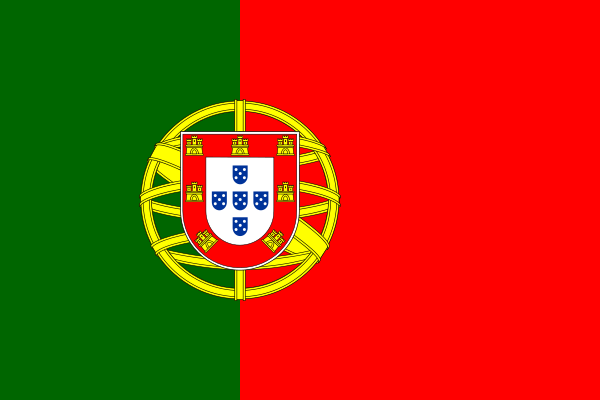
 Portugal Day
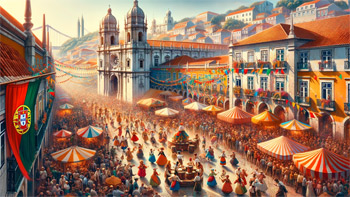

Portugal Day, celebrated on June 10th, is one of the most significant national holidays in Portugal, honoring Portuguese history, culture, and the achievements of the Portuguese people both in their home country and around the world. This day pays tribute to Luís de Camões, Portugal's most revered poet, who died on June 10, 1580. Camões wrote "Os Lusíadas," a seminal work that celebrates Portuguese explorations and maritime achievements, and has since become a symbol of the Portuguese spirit and resilience. Portugal Day is not only a reflection of national pride but also a celebration of the Portuguese communities spread across the globe, reinforcing the ties between them and their homeland.
The observance of Portugal Day goes beyond commemorating the past; it is a lively celebration of the vibrant culture, language, and heritage that defines Portugal. From the northern regions of Minho to the southern shores of Algarve, each corner of Portugal and its autonomous regions, Azores and Madeira, come alive with festivities that include parades, concerts, and cultural events. These celebrations are a testament to the enduring spirit of the Portuguese people, their contributions to world history, and their ongoing influence in the global community.
History and Significance of Portugal Day
Portugal Day's origins can be traced back to the death of Luís de Camões, who is celebrated for his contribution to Portuguese literature and national identity. Camões' work, particularly "Os Lusíadas," is a cornerstone of Portuguese literature, capturing the voyages of discovery and the adventures of Portuguese explorers. The day was officially designated as Portugal Day in 1933, during the Estado Novo regime, as part of a broader effort to foster national unity and pride. However, it has since evolved to become a day that not only honors Camões and the Portuguese discoveries but also celebrates the enduring spirit, culture, and community of the Portuguese people.
The significance of Portugal Day lies in its ability to unite Portuguese people across the world. It is a day when the diaspora communities come together to celebrate their heritage, language, and cultural traditions. The celebrations are particularly vibrant in countries with large Portuguese communities, such as Brazil, France, Canada, and the United States, where Portugal Day is also an opportunity to showcase the rich cultural tapestry of Portugal to the wider world. These global celebrations highlight the universal appeal of Portuguese culture and its contributions to world civilization.
Celebrations and Traditions
On Portugal Day, the entire country bursts into celebrations that are both reflective and festive. The day typically begins with official ceremonies, including the raising of the Portuguese flag, followed by military parades and speeches by political leaders. One of the highlights is the President's speech, which not only pays homage to Portugal's history and culture but also addresses the state of the nation and its future. These official events are complemented by a wide range of cultural activities, including concerts, art exhibitions, and poetry readings, celebrating the richness of Portuguese culture.
In addition to the official and cultural events, Portugal Day is a time for family gatherings and community festivities. Traditional Portuguese music, dance, and cuisine play a central role in these celebrations, bringing people together to share in the joy and pride of their heritage. Communities organize fairs and markets, showcasing Portuguese crafts, foods, and wines, offering a taste of Portugal's diverse regional cultures. These gatherings are an opportunity for generations to come together, with older members sharing stories and traditions with the younger ones, thus ensuring that the rich tapestry of Portuguese culture is passed down through the ages.
The Global Impact of Portugal Day
Portugal Day's impact extends far beyond the borders of Portugal, reflecting the global presence of the Portuguese diaspora. In countries around the world, Portuguese communities organize events that mirror the celebrations back home, from cultural festivals to parades, and even academic conferences focusing on Portuguese history and heritage. These global celebrations not only strengthen the bonds between Portuguese people worldwide but also highlight the significant contributions of Portuguese culture and its diaspora to global society.
The day serves as a reminder of the historical ties that bind the Portuguese-speaking countries, known as the Lusophone world, which includes nations like Brazil, Mozambique, Angola, Cape Verde, Guinea-Bissau, São Tomé and Príncipe, and East Timor. Portugal Day is thus an occasion for these countries to celebrate their shared heritage and the linguistic and cultural ties that connect them. It is a day that transcends national boundaries, fostering a sense of unity and solidarity among the Lusophone countries and their diasporas.
Portugal Day is a vibrant expression of national pride, cultural identity, and the enduring spirit of the Portuguese people. It is a day that honors the past while looking forward to the future, celebrating the contributions of Portuguese people to the world. Through its global celebrations, Portugal Day not only reinforces the cultural bonds among Portuguese communities worldwide but also showcases the richness of Portuguese culture, heritage, and history to the rest of the world. As such, Portugal Day remains a testament to the global impact and enduring legacy of Portuguese exploration, literature, and culture, uniting Portuguese people around the globe in a shared celebration of their heritage and identity.