 Restoration of Independence Day in Portugal

Restoration of Independence Day in Portugal is a significant national holiday, celebrated every year on December 1st. This day marks Portugal's reclaiming of sovereignty from Spanish rule in 1640, after 60 years of Iberian Union. The day is not just a public holiday; it symbolizes the resilience, courage, and unwavering spirit of the Portuguese people in their quest for self-determination and independence. The historical context surrounding this event is as fascinating as it is pivotal, not just for Portugal but for the shaping of European history during the 17th century.
The background to the Restoration of Independence is deeply interwoven with the complex political and dynastic alliances of the time. In 1580, the death of the childless King Henry of Portugal led to a succession crisis, eventually resulting in the Spanish king, Philip II, claiming the Portuguese throne. This claim was not without basis, as Philip was a nephew of the Portuguese king. However, what was initially seen by some as a dynastic union gradually became perceived as a Spanish annexation. Over the decades, the distinct identity, interests, and autonomy of Portugal were increasingly subsumed under Spanish hegemony, leading to growing unrest among the Portuguese nobility and people alike.
The Struggle for Independence
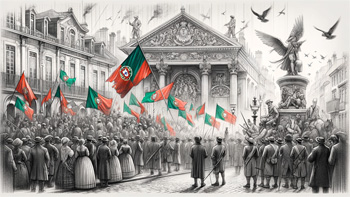
The discontent with Spanish rule reached a boiling point in the late 1630s. The heavy taxation, involvement in continuous European wars, and disregard for Portuguese autonomy fueled a secret movement among the nobility and the people for the restoration of independence. The conspiracy culminated on December 1, 1640, when a small group of Portuguese nobles stormed the royal palace in Lisbon, deposing the Spanish governor and proclaiming the Duke of Braganza as King João IV of Portugal. This bold act was the spark that ignited a widespread uprising across the country, leading to the re-establishment of a separate Portuguese monarchy.
The ensuing period was marked by the struggle to maintain this hard-won independence. Spain, unwilling to easily relinquish control over Portugal, waged a series of conflicts known as the Portuguese Restoration War. Despite being outnumbered and facing a formidable opponent, Portugal's military strategies, bolstered by alliances with France and England, eventually led to the recognition of its sovereignty with the Treaty of Lisbon in 1668. This victory was not merely military but also a significant diplomatic achievement, showcasing Portugal's resilience and strategic acumen.
Celebrations and Traditions
Today, the Restoration of Independence Day is commemorated with a variety of events and traditions throughout Portugal. The day is a public holiday, allowing families and communities to come together in celebration of their national heritage and history. Official ceremonies, military parades, and cultural events are held in cities and towns, reflecting the pride and joy of the Portuguese people in their country's independence. In Lisbon, the capital, the focal point of celebrations is often at the Restauradores Square, named in honor of the restoration of independence, where wreaths are laid to pay homage to the heroes of the Restoration.
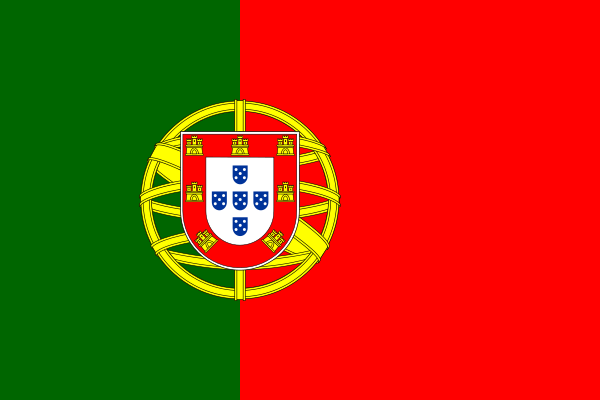
Aside from the official ceremonies, there are also educational events, exhibitions, and discussions that delve into the historical significance of the day. Schools and cultural institutions play a crucial role in this, educating the younger generations about the importance of independence and the struggles their ancestors endured to achieve it. The day also sees a surge in nationalistic sentiments, with the Portuguese flag prominently displayed in homes, public buildings, and streets, symbolizing unity and pride in Portugal's identity and sovereignty.
The Significance of the Day in Modern Portugal
In contemporary Portugal, Restoration of Independence Day goes beyond commemorating a historical event; it serves as a reminder of the values of freedom, resilience, and self-determination. These principles are integral to the Portuguese national identity and continue to inspire not only in Portugal but also in its relations with the rest of the world. The day is an opportunity to reflect on the journey of the nation, the challenges it has overcome, and the aspirations for the future.
Moreover, this holiday fosters a sense of unity and national pride among the Portuguese people. It is a day that transcends political, social, and economic differences, bringing the nation together to celebrate a common heritage. The story of the Restoration of Independence is a testament to the enduring spirit of the Portuguese people, their capacity for self-governance, and their commitment to preserving their cultural identity and sovereignty.
As Portugal continues to navigate the complexities of the modern world, the Restoration of Independence Day serves as a powerful reminder of the country's resilience and its ability to adapt and thrive. It is a day that not only looks back at the past but also forward to the future, embodying the hopes and dreams of the Portuguese people. Celebrating this day, Portugal reaffirms its place in the world as a nation proud of its history, culture, and achievements, and committed to the principles of independence and freedom that have shaped its journey.
In essence, the Restoration of Independence Day in Portugal is a profound reflection of the nation's spirit and its ongoing journey of self-determination and resilience. It is a day that encapsulates the struggle for freedom, the joy of independence, and the pride of a nation in its identity and achievements. As Portugal celebrates this day, it not only honors its past but also looks forward to a future filled with promise and hope, grounded in the values that have guided its path for centuries.