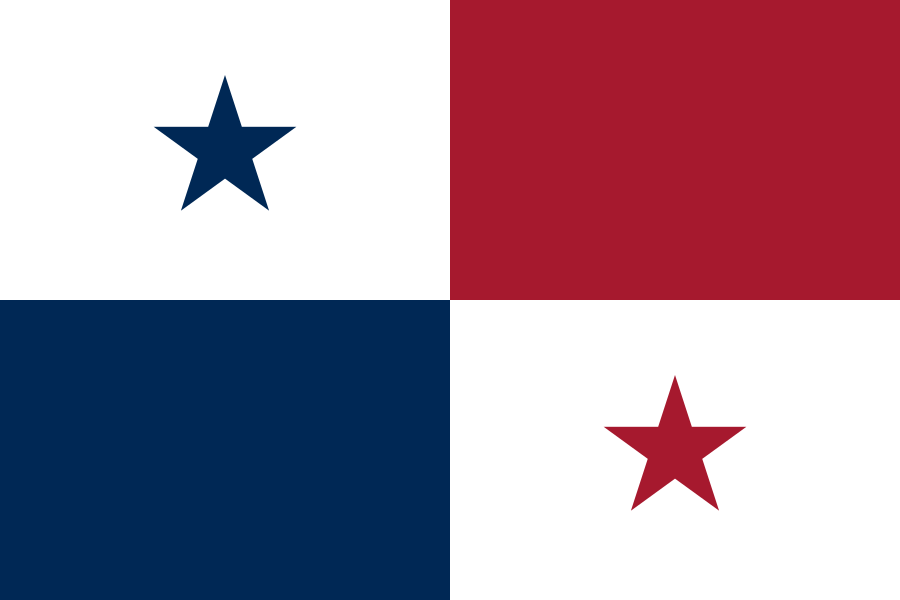
Independence Day in Panama
Independence Day in Panama is a national holiday celebrated on November 28 each year. This day commemorates Panama's final independence from Spain in 1821, marking the nation's emergence as a self-governing entity. Independence Day is a time for Panamanians to reflect on their history, honor their cultural heritage, and celebrate the progress made since gaining freedom from colonial rule. The day is marked by vibrant celebrations and serves as a reminder of Panama's journey towards becoming a sovereign nation.
Historical Background
Panama's independence from Spain was part of a broader movement for liberation across Latin America in the early 19th century. For nearly 300 years, Panama was under Spanish colonial rule, but the winds of change began to blow in the 1800s. Inspired by movements in other Latin American countries, Panama's leaders sought to free their country from colonial dominance. On November 28, 1821, Panama declared its independence, joining the Republic of Gran Colombia, which included present-day Colombia, Ecuador, and Venezuela. This union marked a significant step towards Panama's eventual sovereignty, paving the way for its development into an independent nation.
Celebrations and Traditions
Independence Day in Panama is celebrated with an array of festivities, highlighting the country's cultural richness and history. The day kicks off with parades featuring schools, organizations, and communities, each showcasing traditional Panamanian attire, music, and dance. These lively parades travel through the streets of Panama City and other towns, bringing together people from all walks of life. In addition to parades, Independence Day includes musical performances, cultural exhibitions, and street fairs, offering a chance to experience Panamanian art, food, and traditions. These celebrations create an atmosphere of national pride and unity, reminding Panamanians of their shared heritage and history.
Government and Community Involvement
Panama's government plays an active role in supporting Independence Day celebrations. Official events include speeches by national leaders, reflecting on the significance of the day and the progress Panama has made since gaining independence. These speeches often emphasize the importance of unity and national pride, reinforcing the value of independence in shaping the country's identity. Local governments and communities also contribute to the day's events, organizing various activities that bring together families and friends, fostering a sense of community and connection. These activities help preserve Panama's cultural heritage and ensure that future generations understand and appreciate the significance of Independence Day.
Independence Day's Impact
Independence Day is a time for Panamanians to reflect on their nation's journey, honoring the progress made since gaining freedom from colonial rule. The day's celebrations foster a sense of national pride and unity, uniting Panamanians in their shared history and culture. For visitors, Independence Day offers an opportunity to experience Panama's rich traditions and cultural diversity, from lively parades to cultural exhibitions. Ultimately, the day symbolizes Panama's resilience, progress, and continued commitment to its sovereignty, serving as a source of inspiration for both its citizens and visitors.