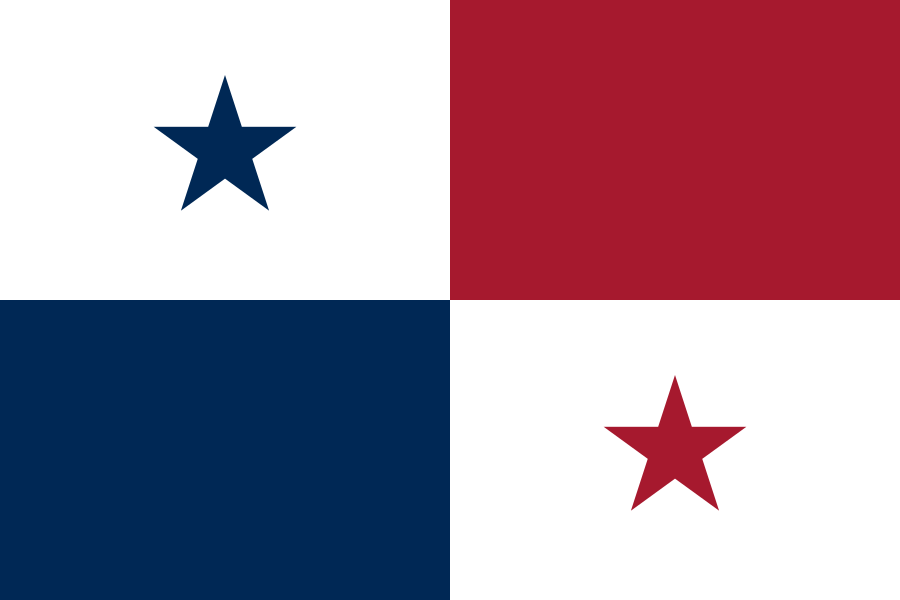
Separation Day in Panama
Separation Day in Panama, observed annually on November 3, marks a significant milestone in the nation's history: its independence from Colombia in 1903. The day is a powerful reminder of Panama's journey toward sovereignty and the struggles and triumphs that came with it. This historic event laid the foundation for Panama's emergence as an independent country, fostering national pride and unity. Today, it is a day of celebration, reflection, and connection to Panama's past, bringing communities together in joyous festivities.
Historical Background
Panama's path to independence was a complex journey, influenced by political and economic factors. For 82 years, Panama was a part of Colombia, but the desire for independence grew steadily, particularly as the Panama Canal project began to take shape. The canal's construction underscored Panama's strategic importance on a global scale, highlighting its economic potential and emphasizing the need for self-determination. The desire for independence culminated in a peaceful separation from Colombia on November 3, 1903, following a bloodless revolution that saw Panama assert its sovereignty and establish its own government. This marked a new era for Panama, setting the stage for its development into the thriving nation it is today.
Celebrations and Traditions
Separation Day is celebrated with various festivities throughout Panama, bringing people together to commemorate this significant moment in their history. Parades are a prominent feature of the celebrations, with participants donning traditional Panamanian attire, such as polleras and montunos. These colorful displays wind through city streets, accompanied by lively music and dancing that reflect Panama's vibrant culture. In addition to parades, communities across the country organize cultural events, including music concerts, folk dance performances, and exhibitions showcasing Panamanian art and history. These celebrations foster a sense of unity and pride, allowing Panamanians to connect with their heritage and each other.
Government and Community Involvement
Panama's government actively supports Separation Day celebrations, recognizing the day's importance in shaping the nation's identity. Official events, often attended by national leaders, include speeches that reflect on Panama's progress since its independence and emphasize the value of unity and national pride. The government also promotes educational programs in schools and communities, teaching the history and significance of Separation Day to younger generations. Beyond official events, local organizations and businesses contribute to the festivities, arranging various activities that bring together families and friends, strengthening Panama's sense of community and shared identity.
Separation Day's Impact
Separation Day serves as a poignant reminder of Panama's journey to independence, highlighting the nation's growth and progress over the past century. The day's celebrations foster a sense of national identity and pride, uniting Panamanians across the country. For tourists, Separation Day offers a unique opportunity to experience Panama's rich culture and traditions firsthand, from vibrant parades to cultural exhibitions. Ultimately, the day symbolizes Panama's resilience, progress, and commitment to maintaining its sovereignty, providing inspiration to both its citizens and visitors.