 Midsummer's Day in Sweden
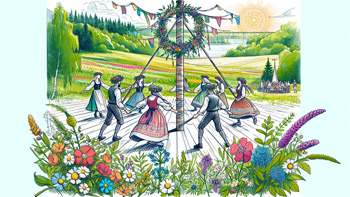

Midsummer's Day in Sweden, celebrated towards the end of June, is one of the most cherished and uniquely Swedish festivities, deeply rooted in the country's culture and history. This holiday, centered around the summer solstice, symbolizes the longest day of the year and is associated with a plethora of traditions, festivities, and a general atmosphere of joy and community spirit. Swedes across the country, and indeed Swedes around the world, come together to mark this special occasion, making it a vibrant and unmissable event on the Swedish calendar.
The origins of Midsummer's Day can be traced back to ancient pagan rituals, with the day initially being celebrated to honor the sun god and to pray for a good harvest. Over the centuries, these pagan traditions have intertwined with Christian customs, morphing into the Midsummer's Day celebrated today. Despite its evolution, the essence of the holiday – celebrating the power of the sun, nature, and community – remains unchanged. It's a day that brings to life the folklore, culture, and social fabric of Sweden, showcasing the country's heritage and its people's bond with nature.
Traditions and Celebrations
One of the most iconic symbols of Midsummer's Day is the maypole, or 'midsommarstång,' a decorated pole that communities raise in an open field. The maypole is adorned with greenery and flowers, symbolizing fertility and growth. Dancing around the maypole to traditional music is a highlight of the celebration, where everyone from young children to the elderly participates in circular dances, often wearing traditional Swedish attire. These dances, characterized by their simplicity and joyfulness, reflect the communal spirit and the importance of tradition in Swedish society.
Another key element of Midsummer's Day is the food. A typical Midsummer feast includes pickled herring, boiled new potatoes with fresh dill, sour cream, and chives, along with grilled dishes and the first strawberries of the season, served with cream or ice cream. This meal, often enjoyed outdoors amidst nature, is not just about indulgence but also about celebrating the bounty of the Swedish summer. The emphasis on fresh, local ingredients highlights Swedes' deep-rooted connection to their land and the cycles of nature.
Floral Wreaths and Folklore
Wearing floral wreaths is another distinctive feature of Midsummer's Day. Swedes, particularly women and girls, create and wear wreaths made of wildflowers and leaves, symbolizing life and growth. This tradition is not only a beautiful way to celebrate the natural beauty of the Swedish countryside but also has roots in ancient rituals and folklore. According to legend, if a girl picks seven different types of flowers in silence and places them under her pillow on Midsummer's night, she will dream of her future spouse.
The day is also rich in other folklore and traditions. Many Swedes still adhere to old superstitions and practices on Midsummer's Eve, such as looking for a "magic" flower known as "midsummer bloom," believed to have healing powers if picked during the night. These traditions, whether believed in earnest or followed in jest, add a layer of mystique and enchantment to the celebrations, connecting the modern festivities with Sweden's ancient past.
Nature and Outdoor Activities
Midsummer's Day is intrinsically linked to the outdoors and nature. The celebration is a perfect excuse for Swedes to escape to the countryside, to cabins by lakes or in the forest, where they can immerse themselves in the natural beauty of their country. This migration to nature is a significant part of the holiday, with families and friends gathering to spend time together in the open air. Activities such as swimming, boating, and fishing, or simply enjoying the tranquility of the Swedish summer, are commonplace, further highlighting the Swedes' love for and connection to their environment.
The importance of light and fire is also evident during Midsummer's celebrations. In some parts of Sweden, bonfires (majbrasor) are lit on Midsummer's Eve, a tradition with ancient roots intended to ward off evil spirits and ensure a good harvest. While not as widespread as the maypole dance, the bonfires that do occur are spectacular and serve as a reminder of the holiday's pagan origins and its celebration of light during the darkest times.
The Social Aspect of Midsummer's Day
At its heart, Midsummer's Day is a celebration of community and togetherness. It's a time when Swedes, often reserved, open up and engage in communal festivities. The holiday serves as an essential social outlet, reinforcing bonds between family members, friends, and even strangers who come together to celebrate. The inclusive nature of the celebrations, where everyone is welcome to join in the dances and partake in the feast, reflects the Swedish values of openness, equality, and collective joy.
In the context of modern Sweden, Midsummer's Day also reflects the country's multicultural fabric. With Sweden becoming increasingly diverse, the holiday offers an opportunity for people of all backgrounds to partake in a quintessentially Swedish tradition, fostering understanding and integration. This blending of cultures and traditions enriches the celebrations, adding new dimensions to the festivities while maintaining their traditional Swedish core.
As we consider the future of Midsummer's Day in Sweden, it's clear that while the ways in which the holiday is celebrated may evolve, its essence will remain the same. It's a day that captures the spirit of Sweden – its love for nature, its rich cultural heritage, and its community values. Midsummer's Day is not just a celebration of the summer solstice; it's a reflection of what it means to be Swedish, offering a window into the soul of the country and its people. As such, it remains one of the most beloved and enduring holidays in the Swedish calendar, a vibrant testament to the country's traditions and its ongoing journey into the future.