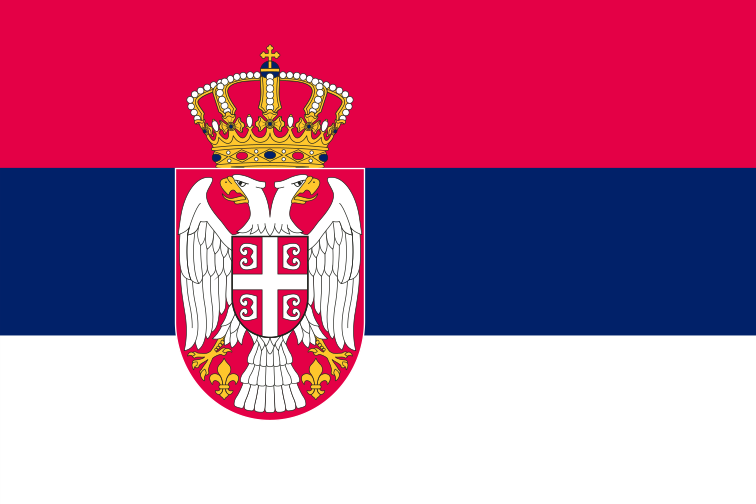
Easter Sunday in Serbia
Easter Sunday in Serbia is a day of great joy and celebration, marking the resurrection of Jesus Christ according to Christian belief. It is the culmination of Holy Week, a time filled with deep religious significance and various traditions. For the Serbian Orthodox Christian community, Easter Sunday is not only a central religious holiday but also an opportunity for families to come together, share love, and renew their faith and hope for the future.
Midnight Church Services
The celebration of Easter Sunday in Serbia begins at midnight, with a special church service known as the Easter Vigil. This service is the highlight of the Orthodox Christian calendar, filled with liturgical chants, readings, and the joyful proclamation that "Christ is risen!" — to which the congregation responds, "Indeed He is risen!" Churches are filled with the light of candles, symbolizing the light of Christ and His victory over death. This moment of communal joy and unity is a powerful experience for believers, marking the beginning of Easter celebrations.
Breaking the Fast and Sharing the Feast
Following the midnight service, families return home to break their Lenten fast with a festive meal. This meal typically includes a rich spread of foods that were abstained from during Lent, such as meat, dairy, and eggs. The centerpiece of the Easter meal is often lamb, symbolizing Christ as the Lamb of God, along with beautifully decorated Easter eggs. These eggs, especially the first red one dyed on Good Friday, are shared among family members in a tradition called "egg tapping," where eggs are tapped against each other to see whose egg will remain uncracked the longest.
Easter Traditions and Customs
Easter Sunday in Serbia is also characterized by vibrant traditions and customs that have been passed down through generations. One of the most cherished is the giving of Easter eggs, which are exchanged among family and friends along with Easter greetings. These eggs, beautifully decorated and dyed in various colors, are symbols of new life and the resurrection. Families also gather for a grand meal, enjoying dishes that are not only delicious but also rich in symbolic meaning.
Another important custom is visiting graves of loved ones, where people light candles and leave eggs and food, honoring those who have passed away. This practice reflects the Serbian belief in the connection between the living and the deceased, emphasizing the Easter message of resurrection and eternal life.
Easter Sunday in Serbia is a day filled with joy, reflection, and community spirit. From the midnight services to the festive meals and age-old customs, it encapsulates the essence of hope and renewal. It's a time when the rich tapestry of Serbian culture, faith, and family comes beautifully together, celebrated with love and joy across the nation.