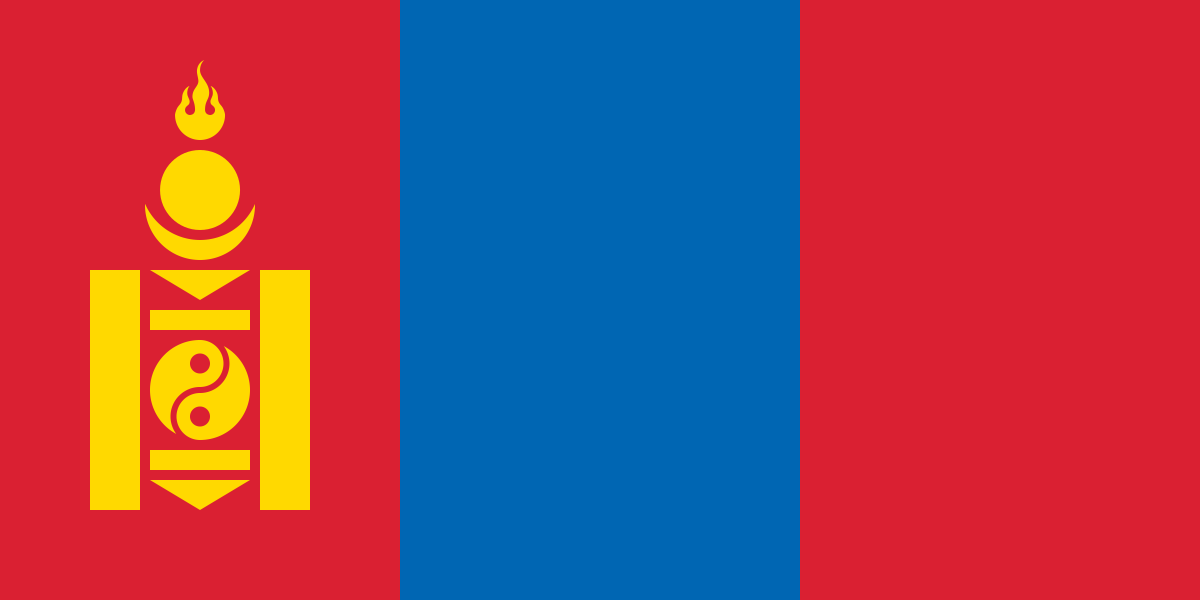
Naadam in Mongolia
Naadam is a traditional festival in Mongolia that has been celebrated for centuries, reflecting the country's nomadic culture and rich history. This vibrant event, also known as "The Three Games of Men," takes place during the midsummer holidays and is the most widely celebrated festival in Mongolia. It showcases the skills and endurance of Mongolian nomads through three ancient sports: wrestling, horse racing, and archery. These games are not only a test of strength and agility but also a way to honor the warrior spirit of the Mongolian people.
The festival's roots can be traced back to the era of the great Mongol Empire, when such competitions were organized to keep the empire's soldiers in top shape during peacetime. Over time, Naadam has evolved into a national holiday that symbolizes unity and pride among Mongolians. It's a time when families gather, communities bond, and everyone, regardless of age or background, participates in the festivities. The most significant Naadam celebrations take place in the capital, Ulaanbaatar, but smaller, local festivals are held throughout the country, each with its own unique charm and fervor.
The Opening Ceremony
The Naadam festival officially begins with a colorful and elaborate opening ceremony at the National Sports Stadium in Ulaanbaatar, which features parades, music, dance performances, and displays of horsemanship. Performers dressed in traditional Mongolian attire showcase the country's cultural heritage, while athletes parade in preparation for the competition. The President of Mongolia traditionally attends and gives a speech, emphasizing Naadam's significance in preserving Mongolian traditions and fostering national unity. This ceremony sets the tone for the celebrations, blending ancient customs with modern patriotism.
The atmosphere is electric, with the air filled with the sounds of traditional Mongolian music and the cheers of excited spectators. The opening ceremony not only serves as a display of Mongolia's rich cultural tapestry but also unites the spectators in anticipation of the thrilling competitions to come. It's a moment of national pride, where the past and present merge to celebrate Mongolia's enduring spirit.
Wrestling
Mongolian wrestling is one of the oldest recorded sports in the world, and it holds a place of honor at Naadam. Wrestlers, known as "bökh," compete in a single-elimination tournament until a champion is crowned. There are no weight classes, making the competition fierce and unpredictable. Wrestlers wear traditional attire, including a "zodog" (an open-fronted jacket), "shuudag" (shorts), and boots. The aim is to make any part of an opponent's body, apart from the feet, touch the ground.
The matches are a test of strength, technique, and strategy, with each wrestler trying to outmaneuver his opponent. Victories are celebrated with a dance that mimics the flight of an eagle, symbolizing strength and freedom. The respect shown between competitors is a testament to the sport's deep-rooted place in Mongolian culture, emphasizing honor, skill, and physical prowess.
Horse Racing
Horse racing during Naadam is unlike any other equine sport in the world. Races are held across the open countryside, with distances ranging from 15 to 30 kilometers, depending on the age of the horses. Unlike Western horse racing, where the focus is on the speed of individual horses, Mongolian horse racing tests the endurance of the animals and the skill of their young riders, some as young as five years old. The relationship between the horse and rider is key, showcasing the nomadic people's deep connection to their animals.
The race is a spectacular sight, with herds of horses thundering across the steppes, kicking up clouds of dust, guided by the expert hands of their youthful jockeys. The community's involvement is profound, with families preparing for months in advance, training their horses and blessing them for strength and speed. The finish line is a scene of celebration and emotion, as the top three horses earn their owners pride and prestige, while the last horse is affectionately called "the Naden," symbolizing the hope that it will do better next time.
Archery
Archery in Mongolia is a display of precision and concentration, with roots stretching back to the times when the bow was a primary weapon of war and hunting. Both men and women compete in separate categories, using traditional Mongolian composite bows made from natural materials. The target is a row of small cylinders arranged in a pyramid shape, challenging archers to demonstrate their skill and accuracy over distances of up to 75 meters.
The competition is accompanied by traditional songs and chants, meant to encourage the archers and pay homage to the bow's historical significance. Archers wear traditional Mongolian attire, adding to the event's cultural richness. The cheering of the crowd, the concentration of the archers, and the historical significance of the sport combine to make the archery competition a captivating and integral part of Naadam.
The Global Resonance of Naadam
In a significant nod to its universal value, UNESCO inscribed Naadam on the Representative List of the Intangible Cultural Heritage of Humanity in 2010. This prestigious acknowledgment highlights the festival's importance not merely to Mongolians but to the entire globe. It signifies Naadam as a vital portal through which the international community can glimpse into the rich cultural fabric and enduring traditions of Mongolia. Such recognition underscores the festival's role in fostering cultural diversity and understanding among peoples around the world, celebrating not just the spirit of Mongolia but the shared heritage of humanity.
In essence, Naadam is more than just a festival; it's a living embodiment of Mongolia's nomadic traditions and a celebration of its national identity. Through the three games of men, Mongolians honor their ancestors, showcase their skills, and reinforce social bonds. It's a time of joy, competition, and cultural pride, deeply engrained in the heart of every Mongolian. For visitors, Naadam offers a unique window into the soul of Mongolia, a chance to experience the thrill of ancient sports and the warmth of Mongolian hospitality. As the festival continues to thrive, it serves as a vibrant reminder of the strength, resilience, and unity of the Mongolian people.