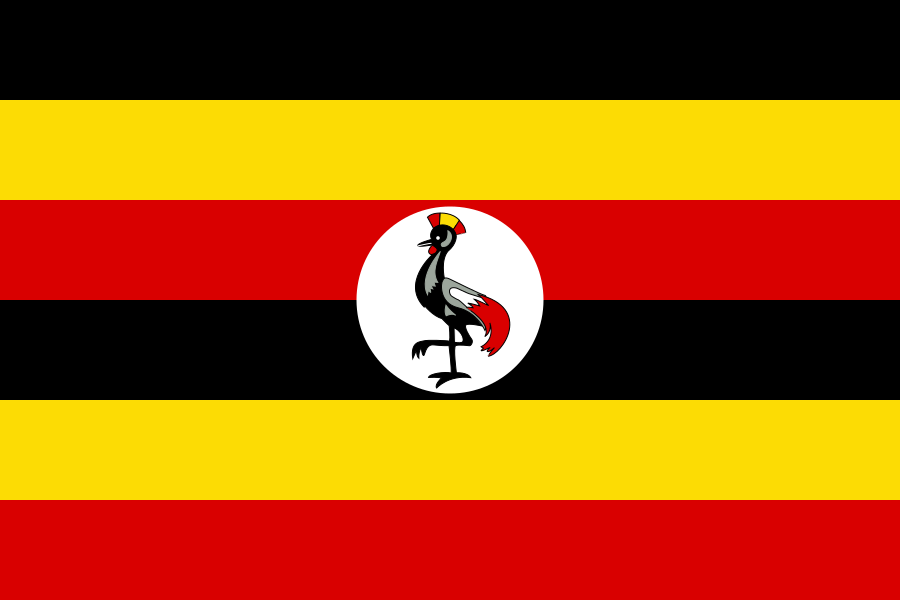
Independence Day in Uganda
Independence Day in Uganda, celebrated every October 9th, marks a pivotal moment in the nation's history. Commemorating the day in 1962 when Uganda achieved sovereignty from British colonial rule, this public holiday stands as a testament to the resilience, determination, and unity of the Ugandan people. Across the country, from the bustling streets of Kampala to remote villages, festivities abound. Cultural performances, parades, and flag-raising ceremonies showcase Uganda's rich heritage and national pride. While it's a day of jubilation, it also prompts reflection on the sacrifices made for freedom. For Ugandans, this holiday serves not just as a reminder of their past, but as an inspiration for a future filled with hope and progress.
Historical Footprints: From Colonial Rule to Sovereignty
To truly grasp the significance of Independence Day, one must journey back to the late 19th and early 20th centuries when Uganda was under British colonial rule. As the British Empire expanded its territories in Africa, Uganda became a protectorate in 1894. While this brought certain advancements, it also came with the challenges and oppressions typical of colonial dominion.
However, the winds of change began to blow in the mid-20th century. With a global push for decolonization and the rise of African nationalism, Ugandans began to ardently demand their rights and sovereignty. After years of struggle and negotiations, their aspirations were realized on October 9, 1962, when Uganda was officially granted independence from British rule. This date has since been etched in the annals of Ugandan history as a testament to the nation's resilience and determination.
Festivities and Reflection: Celebrating the Spirit of Uganda
Come October 9th, the air in Uganda is palpable with excitement and patriotic fervor. As a public holiday, the day sees a series of official events and celebrations, often graced by the President and other dignitaries. From the capital city of Kampala to the remote villages, the Ugandan flag flutters proudly, a symbol of national pride and unity.
Cultural performances, showcasing the diverse ethnic groups and their rich traditions, are a highlight. Music, dance, and storytelling sessions take center stage, narrating the tales of Uganda's journey to freedom and its vibrant cultural heritage. Schools, institutions, and communities organize parades, debates, and forums, reflecting on the country's past, its present challenges, and the dreams for a brighter future.
Unity and Hope: The Heartbeat of Independence Day
While Independence Day is undoubtedly a time of celebration, it's also a day of reflection. It serves as a reminder of the sacrifices made by countless Ugandans to secure the nation's freedom. It's a day to honor the visionaries who dreamt of a sovereign Uganda and the ordinary citizens who played their part in turning this dream into reality.
Moreover, as a public holiday, Independence Day offers a moment for Ugandans, both at home and in the diaspora, to come together in unity. It's a day to set aside differences, to celebrate the shared Ugandan identity, and to aspire for a nation marked by peace, progress, and prosperity. It's a beacon of hope, illuminating the path for future generations, instilling in them the values of resilience, unity, and the spirit of 'Ubuntu' - the African philosophy emphasizing communal values, humanity, and mutual respect.
Horizons of the Pearl of Africa
Independence Day in Uganda is more than just a commemoration of historical events; it's a celebration of a nation's soul. It's about honoring the past, navigating the challenges of the present, and forging ahead with hope and determination. As the sun sets on October 9th, casting a golden glow over Uganda's scenic landscapes, one thing remains clear: the spirit of Independence Day is not confined to a single date. It lives on in the hearts and aspirations of Ugandans, guiding them as they continue their journey, shaping the destiny of the 'Pearl of Africa'.