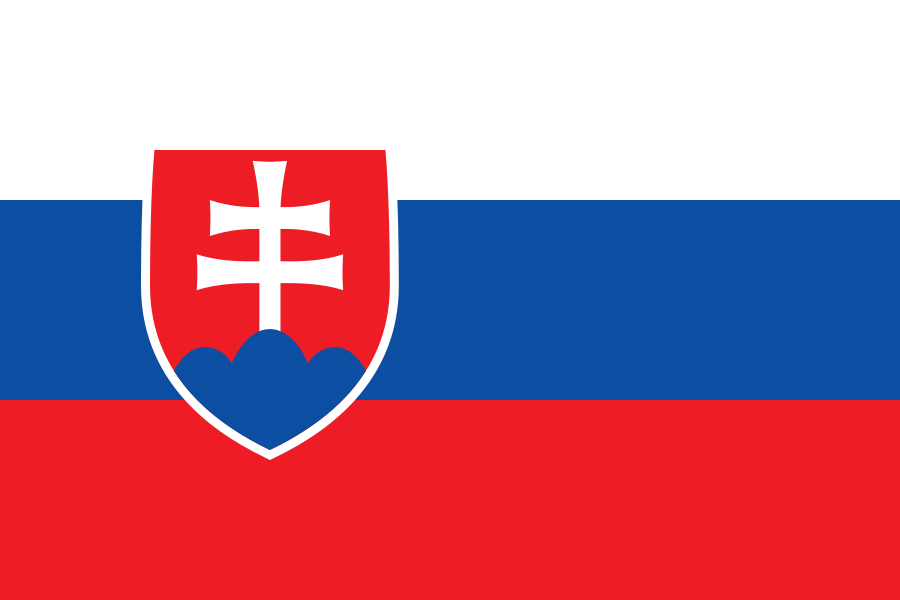
Day of Freedom and Democracy in Slovakia
The Day of Freedom and Democracy is a significant public holiday in Slovakia, observed annually on November 17th. This day is a poignant reminder of the struggle for freedom and democracy, commemorating two critical moments in Slovak history: the 1939 student demonstrations against Nazi Germany's occupation and the 1989 Velvet Revolution that led to the downfall of the communist regime in Czechoslovakia. For Slovaks, this day symbolizes the resilience and courage of the Slovak people in their quest for freedom and democratic rights. It's a time to reflect on the importance of liberty, human rights, and the rule of law in creating a just and equitable society.
The celebrations on the Day of Freedom and Democracy are diverse, reflecting the deep historical and emotional significance of the occasion. Across Slovakia, people participate in commemorative events, including memorial services, exhibitions, public discussions, and educational programs. These activities serve not only to honor those who fought for freedom and democracy but also to educate the younger generations about their country's past struggles and achievements. It's a day that underscores the value of democracy and the ongoing responsibility of citizens to protect and nurture it.
The Historical Context of November 17th
The origins of the Day of Freedom and Democracy can be traced back to two pivotal events in Slovak and Czech history. On November 17, 1939, Slovak and Czech students in Prague staged protests against the Nazi occupation of Czechoslovakia. The protests were brutally suppressed, leading to the execution of nine student leaders and the closing of all Czech universities. This day was later commemorated as International Students' Day. Fifty years later, in 1989, the Velvet Revolution began with a peaceful student demonstration in Prague, which sparked a series of events leading to the end of communist rule in Czechoslovakia. The revolution was characterized by its non-violent nature and the pivotal role played by students and intellectuals, eventually resulting in the establishment of a democratic government.
These historical milestones are deeply ingrained in the Slovak consciousness and are a testament to the nation's enduring spirit of resistance and desire for freedom and democracy. The Day of Freedom and Democracy thus serves as a dual commemoration, honoring both the bravery of the 1939 student protesters and the peaceful revolutionaries of 1989. It's a day that connects past and present, reminding Slovaks of their shared history and the sacrifices made for their freedoms.
Celebrating Freedom and Democracy
On the Day of Freedom and Democracy, Slovakia comes alive with a spirit of remembrance and celebration. The day's events are designed to foster a sense of national pride and communal reflection. In the capital city of Bratislava and throughout the country, memorials and monuments become gathering places for those wishing to pay their respects. Educational institutions play a crucial role in commemorating this day, organizing seminars, discussions, and screenings of documentaries that explore the themes of freedom, democracy, and civil rights. These events encourage a dialogue between generations, ensuring that the stories of resistance and liberation are passed down and remembered.
Moreover, cultural events such as concerts, exhibitions, and theater performances offer a creative reflection on the themes of the day. These artistic expressions provide a space for contemplation and interpretation, allowing people to connect with the historical significance of November 17th on a personal level. The Day of Freedom and Democracy is not only a public holiday but also an opportunity for communal healing and strengthening the democratic values that underpin Slovak society.
The Importance of Remembrance and Education
Remembering the Day of Freedom and Democracy is crucial for maintaining the democratic fabric of Slovak society. It serves as a reminder of the fragility of freedom and the importance of vigilance in safeguarding democracy. By commemorating this day, Slovaks reaffirm their commitment to the principles of liberty, justice, and human rights. It's a day that emphasizes the collective responsibility to resist tyranny and oppression, ensuring that future generations inherit a society where freedom and democracy flourish.
Education plays a vital role in the commemoration of the Day of Freedom and Democracy. Through various educational initiatives, young Slovaks learn about the significance of this day and the broader context of their country's struggle for freedom. Schools and universities become platforms for dialogue and reflection, where students are encouraged to engage with their history critically and to appreciate the hard-won freedoms they enjoy today. This emphasis on education ensures that the legacy of the past is preserved and that the values of democracy and freedom are embedded in the national consciousness.
In celebrating the Day of Freedom and Democracy, Slovakia honors its past while looking towards the future with hope and determination. This day is a powerful reminder of the country's journey from oppression to freedom, from dictatorship to democracy. It celebrates the spirit of resistance, the triumph of peaceful revolution, and the enduring value of freedom. As Slovaks come together to remember and reflect, they reaffirm their commitment to a democratic society that respects human rights and upholds the dignity of every citizen. The Day of Freedom and Democracy is not just a historical commemoration; it's a living testament to the resilience of the human spirit and the ongoing struggle for a better, freer world.