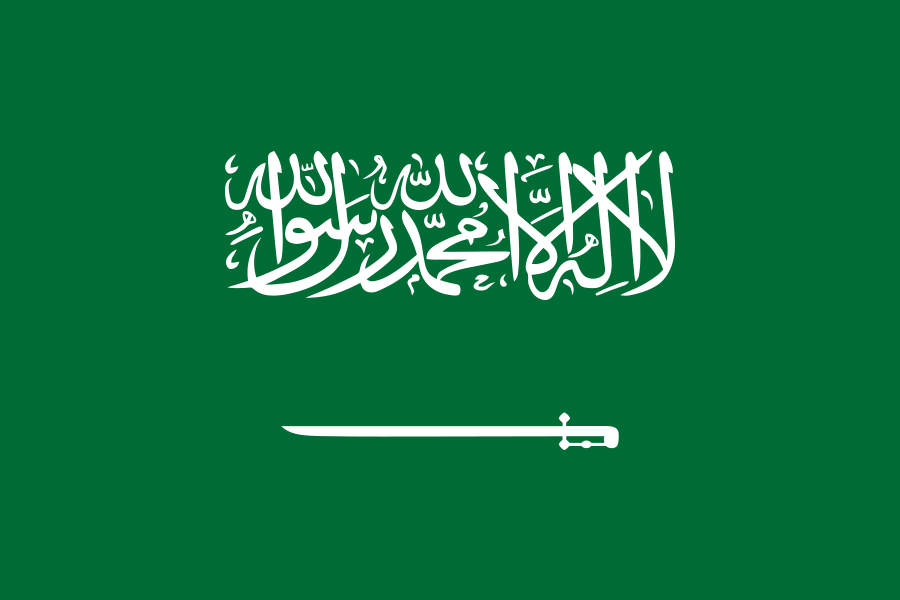
 Eid al-Adha in Saudi Arabia

Eid al-Adha, known as the "Festival of Sacrifice," is one of the most significant Islamic holidays celebrated worldwide, and it holds a special place in the hearts of those in Saudi Arabia. This revered holiday commemorates the willingness of Prophet Ibrahim (Abraham) to sacrifice his son as an act of obedience to Allah, before Allah provided him with a ram to sacrifice instead. In Saudi Arabia, Eid al-Adha is not just a religious observance; it is a time of unity, generosity, and deep spiritual reflection that permeates throughout the kingdom, showcasing the rich Islamic heritage and the profound sense of community among its people.
The celebrations in Saudi Arabia for Eid al-Adha start after the Hajj, the annual Islamic pilgrimage to Mecca, which is one of the five pillars of Islam. This timing underlines the holiday's profound significance, linking it directly to the spiritual journey that millions undertake each year. For Saudis, Eid al-Adha is a time to strengthen faith, renew spiritual commitment, and celebrate the essence of Islam, fostering a sense of belonging and togetherness among the Muslim community. The holiday's observance is a vivid display of the kingdom's dedication to preserving Islamic traditions while embracing the spirit of modernity.
Preparations and Celebrations
Preparations for Eid al-Adha in Saudi Arabia begin well before the holiday. Markets and shops get busier as families shop for new clothes, gifts, and everything needed for the feast. The scent of oud and bakhoor fills the air, adding to the festive atmosphere. Homes are cleaned and decorated, and families prepare to welcome guests. The spirit of Eid al-Adha is marked by a sense of renewal and readiness to celebrate one of the most important days in the Islamic calendar.
The day of Eid al-Adha begins with the Eid prayer, performed in mosques and open areas across Saudi Arabia. This is a moment of communal worship, as people dressed in their finest attire gather in large numbers, embodying the unity and equality among all, which are central tenets of Islam. Following the prayer, the ritual of Qurbani (sacrifice) takes place, where animals, usually sheep, goats, cows, or camels, are slaughtered as a symbol of Ibrahim's sacrifice. This act of sacrifice is not only a religious observance but also a means of sharing with those in need, as the meat is distributed among family, friends, and the less fortunate, ensuring everyone partakes in the joy and bounty of Eid.
Feasts and Social Gatherings
The festivities of Eid al-Adha are characterized by grand feasts and social gatherings. Families and friends come together to share meals that are rich in tradition and flavor, featuring dishes such as kabsa, mandi, and other local delicacies. These gatherings are a time for joy and laughter, reinforcing family bonds and community ties. It is customary for people to visit each other's homes, exchange gifts, and extend wishes of prosperity and happiness. The open-hearted hospitality for which Saudis are known becomes even more pronounced during Eid al-Adha, with everyone eager to share the blessings of the occasion.
In addition to private gatherings, public celebrations are held across the kingdom. Parks, public squares, and beaches host various entertainment activities, cultural programs, and events for children, making Eid al-Adha a time of joy and excitement for all ages. These events not only provide entertainment but also educate the younger generation about the significance of Eid al-Adha and its traditions, ensuring that the essence of the holiday is passed down through generations.
Charity and Community Service
Charity, known as Zakat and Sadaqah, is a cornerstone of Eid al-Adha celebrations in Saudi Arabia. The act of sacrificing an animal and distributing its meat to those in need is a powerful expression of solidarity and compassion, reflecting the holiday's spirit of giving and sharing. Beyond this, many individuals and organizations engage in additional acts of charity, providing food packages, clothing, and financial support to the less fortunate. This heightened sense of social responsibility during Eid al-Adha strengthens the fabric of the community, ensuring that the joy of the holiday is experienced by all segments of society.
The emphasis on community service extends to various initiatives aimed at helping those in need, both within and beyond Saudi borders. Volunteer groups and charitable organizations work tirelessly during this period, organizing events and drives to support refugees, the elderly, and orphans. The generosity and community spirit seen during Eid al-Adha are a testament to the values that underpin Saudi society, highlighting the kingdom's commitment to humanitarian causes and the welfare of the global Muslim community.
Tradition Meets Modernity
While deeply rooted in tradition, Eid al-Adha in Saudi Arabia also reflects the kingdom's journey towards modernity. Innovative approaches to celebrating the holiday, such as virtual gatherings and online charity drives, have become increasingly common, especially in light of recent global challenges. These modern practices coexist with traditional ones, showcasing the dynamic and evolving nature of Saudi society. Even as Saudis embrace new ways of celebrating, the essence of Eid al-Adha—faith, gratitude, generosity, and community—remains unchanged, bridging the past and present.
In Saudi Arabia, Eid al-Adha is more than just a religious festival; it is a vibrant expression of Islamic culture, a time for reflection, and an opportunity to strengthen community bonds. The celebrations capture the kingdom's spirit, balancing reverence for tradition with an openness to innovation. As Saudi Arabia continues to evolve, the enduring significance of Eid al-Adha remains a beacon of faith, unity, and generosity, resonating with people across the nation and beyond.
The celebration of Eid al-Adha in Saudi Arabia is a profound manifestation of Islamic faith and culture, bringing together the past and the present in a joyful and meaningful way. Through its rituals, feasts, and acts of charity, Eid al-Adha fosters a sense of community, deepens spiritual connections, and reinforces the values of generosity and compassion. As one of the most cherished holidays in the Islamic calendar, it offers a moment to pause, reflect, and celebrate the blessings of life with family, friends, and the wider community, embodying the true spirit of Islam.