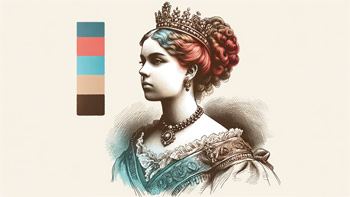
Queen Victoria, born Alexandrina Victoria, was the longest-reigning monarch in British history before Queen Elizabeth II, serving from 1837 to 1901. Her reign, known as the Victorian Era, was a period of significant industrial, cultural, political, and scientific change in the United Kingdom. This article seeks to explore the life of Queen Victoria, her ascension to the throne, her influence on the British Empire, and the cultural and political legacy she left behind.
Early Life and Ascension to the Throne
Born on May 24, 1819, in Kensington Palace, London, Victoria was the daughter of Prince Edward, Duke of Kent and Strathearn, and Princess Victoria of Saxe-Coburg-Saalfeld. She was fifth in line to the throne at birth but became the heir presumptive after her father and three uncles died without surviving legitimate children. Upon the death of her uncle, King William IV, in 1837, Victoria ascended to the throne at the age of 18. Her early reign was marked by a struggle to assert her independence from dominant maternal figures and court advisors.
Reign and Influence on the British Empire
Victoria's reign saw the expansion of the British Empire to its zenith. She presided over a period of industrial innovation, economic expansion, and imperial conquest. Notable milestones included the Great Exhibition of 1851, showcasing the heights of British industry and culture, and the incorporation of India into the empire after the Indian Rebellion of 1857. Victoria was proclaimed Empress of India in 1876, highlighting the empire's global dominance.
Political Influence and Constitutional Changes
While the British monarchy's political power was waning in favor of a parliamentary system, Victoria played a significant role in shaping the nation's policies. Her relationships with Prime Ministers, notably with Lord Melbourne and later with Benjamin Disraeli, were instrumental in guiding the political direction of her reign. She was a staunch supporter of the British constitutional monarchy and helped stabilize the transition from an absolute monarchy to a more symbolic and ceremonial role.
Personal Life and Public Image
Victoria married her cousin, Prince Albert of Saxe-Coburg and Gotha, in 1840. Their marriage was a partnership that significantly influenced the queen's reign. Albert's death in 1861 devastated Victoria, leading her into prolonged mourning. This period marked a decline in her public appearances, but she remained an important symbolic figure of stability, morality, and traditional values in a rapidly changing society.
Cultural and Scientific Advancements
The Victorian era was a time of significant cultural and scientific advancements. In literature, the period saw the works of Charles Dickens, the Brontë sisters, and Thomas Hardy. Technological innovations like the steam engine, telegraph, and railways transformed the British landscape and society. Scientific progress was marked by Charles Darwin's theory of evolution and significant advancements in medicine.
Legacy and Historical Significance
Queen Victoria's death in 1901 marked the end of an era. Her reign had witnessed the transformation of Britain into a global superpower with a vast empire. The Victorian era is remembered for its contributions to modern political, cultural, and social norms. The period laid the foundations for the modern British state, with significant reforms in education, voting rights, and the industrial economy.
Queen Victoria's legacy extends beyond her reign. She became a symbol of a bygone era, representing a period of British history known for its moral strictness, cultural richness, and global influence. Her impact on British identity and the monarchy's role in the modern world continues to be felt and studied, making her one of the most significant figures in British history.