 Constitution Day in Norway
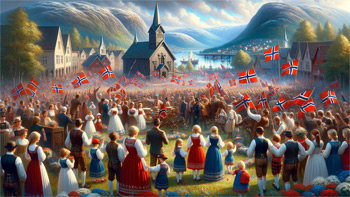

Constitution Day in Norway, also known as Syttende Mai (Seventeenth May), is a highly revered holiday that marks the anniversary of the signing of the Norwegian Constitution in Eidsvoll on May 17, 1814. This day stands as a significant emblem of national pride and historical importance, celebrating Norway's independence and the establishment of its constitution. It is a day filled with vibrant parades, traditional costumes, and nationalistic fervor, reflecting the spirit and unity of the Norwegian people.
The origins of Constitution Day trace back to the early 19th century when Norway sought to assert its autonomy after centuries of union with Denmark and, subsequently, a forced partnership with Sweden. The Norwegian Constitution, inspired by the United States Declaration of Independence and the French Revolution, was one of the most progressive of its time, emphasizing the sovereignty of the people and the separation of powers. This historic document laid the groundwork for democratic governance in Norway, making its commemoration an essential part of the nation's identity.
Traditions and Celebrations
Constitution Day in Norway is characterized by grand public celebrations that showcase the country's rich cultural heritage and patriotic pride. The day begins with the hoisting of the Norwegian flag and the singing of the national anthem, symbolizing the unity and independence of the nation. Children play a central role in the festivities, participating in parades led by marching bands through cities and towns. These parades, known as barnetog (children's parades), are a unique feature of the celebration, emphasizing the importance of future generations in the preservation of national values.
In addition to the children's parades, local communities organize various activities and events, including speeches, performances, and games, to engage people of all ages. Traditional Norwegian costumes, called bunad, are worn with pride, displaying regional patterns and designs that reflect Norway's diverse cultural history. Families and friends gather for festive meals, enjoying typical Norwegian dishes and desserts. The day is a public holiday, allowing everyone to partake in the celebrations and reflect on the significance of the constitution and the freedoms it guarantees.
The Significance of the Constitution
The Norwegian Constitution not only symbolizes the nation's independence but also embodies the values of democracy, equality, and justice. Its adoption in 1814 was a revolutionary act that marked Norway's transition from a monarchy under Danish rule to a sovereign state with a constitutional government. The constitution has undergone amendments over the years, but its core principles remain intact, serving as a testament to Norway's commitment to democratic ideals and human rights.
The celebration of Constitution Day is a powerful reminder of the struggles and achievements of the Norwegian people in their quest for self-determination and national identity. It is a day to honor the visionaries who drafted the constitution and the generations who have preserved and enriched its legacy. Through the annual festivities, Norwegians reaffirm their allegiance to the values enshrined in the constitution and their dedication to maintaining a free and democratic society.
Global Observance and Impact
While Constitution Day is a national holiday in Norway, its observance has spread beyond the country's borders, reflecting the global reach of the Norwegian diaspora. Norwegian communities around the world celebrate May 17th with similar enthusiasm, organizing parades, cultural events, and gatherings. These global celebrations not only strengthen the bonds among Norwegians living abroad but also promote Norway's cultural heritage and democratic values on the international stage.
The global observance of Constitution Day underscores the universal appeal of the ideals it represents. It serves as an inspiration for nations and peoples striving for freedom, democracy, and the rule of law. By showcasing the significance of constitutional governance and national sovereignty, Norway's Constitution Day contributes to the global discourse on human rights and democratic development.
Education and Civic Engagement
An integral part of Constitution Day is its emphasis on education and civic engagement. Schools and educational institutions play a key role in the celebrations, organizing programs and activities that educate students about the history of the constitution and its importance in contemporary society. Through essays, debates, and presentations, young Norwegians are encouraged to reflect on their civic responsibilities and the role of the constitution in safeguarding their rights and freedoms.
This focus on education ensures that the values and principles of the constitution are passed down to future generations. It fosters a sense of national pride and civic duty among young people, empowering them to contribute to the ongoing development of Norwegian democracy. The celebration of Constitution Day thus serves as an important occasion for reinforcing the ideals of participation, equality, and respect for diversity within the community.
In essence, Constitution Day in Norway is a vibrant and meaningful celebration that embodies the spirit of independence, democracy, and national unity. Through its rich traditions, educational initiatives, and global observance, the day not only commemorates the historical significance of the Norwegian Constitution but also reinforces the values it represents. As Norwegians, both in Norway and around the world, come together to celebrate, they reaffirm their commitment to freedom, equality, and justice, ensuring that the legacy of May 17th continues to inspire and guide future generations.