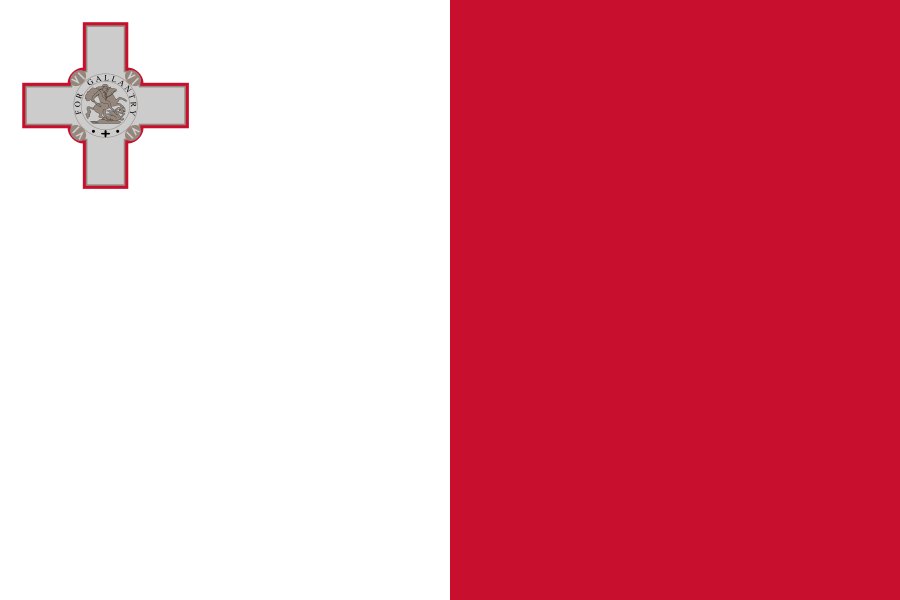
Independence Day in Malta
Malta, an archipelago nestled in the heart of the Mediterranean, celebrates its Independence Day on the 21st of September each year. This day marks Malta's historic achievement of gaining independence from British rule in 1964. It is a day that evokes a sense of pride among the Maltese population and is commemorated with a plethora of events and ceremonies that reflect the nation's rich history and cultural heritage.
The Maltese Islands, with their strategic location, have been a crossroads for various civilizations throughout history. The path to independence was a journey of resilience and determination. It was on the 21st of September 1964 that Malta ceased to be a British colony, and the Maltese flag was hoisted at Independence Arena, signifying the start of a new chapter as an independent nation. Malta's Independence Day is not only a public holiday but a deep reflection of the country's identity and the enduring spirit of its people.
The Historical Significance of Independence Day
The significance of Independence Day in Malta cannot be overstated. The island's strategic position made it a prized possession for centuries, with a history of foreign rule dating back to the Phoenicians, Romans, Moors, Knights of Saint John, French, and the British. Each left an indelible mark on Malta's social, cultural, and political landscape. The British, who ruled Malta for 164 years, had a profound impact on the country’s infrastructure, legal system, and education. Independence Day thus symbolizes the triumph of Maltese identity and governance after centuries of foreign dominion.
Malta's journey towards independence was gradual, starting with the award of self-government in 1921, then briefly interrupted by the islands’ crucial role during World War II. Following the war, the movement for independence gained momentum, leading to the pivotal moment in 1964 when Malta was recognized as an independent and sovereign state. The independence constitution was adopted, and the first Maltese parliament was formed, paving the way for the development of a distinct national policy.
Celebrating Independence Day: Festivities and Traditions
Independence Day in Malta is a colorful and joyous occasion. The day is filled with various activities that range from solemn to festive. Official ceremonies typically include a speech by the President of Malta and the Prime Minister, along with the raising of the Maltese flag. One of the highlights is the Independence Day Regatta, a rowing race in the Grand Harbour, a tradition that is passionately followed by locals and tourists alike.
Cultural events, such as concerts and exhibitions, showcase Maltese music, art, and history, while localities organize their own festivities, including marches and performances. The streets of Valletta, the capital city, are adorned with Maltese flags and banners, creating a vibrant atmosphere that invites participation and celebration. In the evening, a grand fireworks display lights up the night sky, a spectacular show of colors that resonates with the freedom and sovereignty that the day represents.
The Role of Education and Reflection
Independence Day also serves as an educational cornerstone, with schools organizing events and activities that teach younger generations about Malta’s history and the significance of independence. Children participate in school plays, essay competitions, and art projects that depict the island's journey to becoming a free nation. It's a day for reflection on the past and the sacrifices made by those who fought for the country’s autonomy.
Furthermore, it is a time for contemplation on the nation’s progress since independence. Maltese citizens reflect on their country's strides in economic development, international relations, and cultural achievements. Malta's membership in the European Union and the Commonwealth of Nations are seen as steps towards strengthening the country’s international presence, a far cry from its former status as a colony.
Independence Day Cuisine: A Taste of Malta
No Maltese celebration would be complete without the local cuisine playing a central role. Independence Day is no exception, with families and communities coming together to share traditional Maltese dishes. Fenkata, a rabbit stew, is a popular dish served during these celebrations. Pastizzi, the flaky pastry filled with ricotta or peas, is enjoyed by many, often accompanied by a glass of local wine or the beloved soft drink, Kinnie.
Food stalls and markets also offer a variety of traditional sweets such as the honey rings known as ‘Qagħaq tal-Għasel’ and ‘Imqaret’, date-filled pastries. These culinary delights are not only a treat for the palate but also a representation of the island's gastronomic heritage, passed down through generations and proudly showcased during national festivities.
Looking to the Future: Malta's Continuing Evolution
As Malta celebrates its Independence Day, the nation also looks to the future. It's a future that holds promise for growth and development while maintaining the cultural and historical roots that define the Maltese identity. The day encourages citizens to aspire for a prosperous nation that upholds the principles of democracy, liberty, and unity. It's an opportunity to envision a path forward that honors the past while embracing the possibilities that lie ahead.
Independence Day in Malta is more than just a commemoration of the past; it's an ongoing celebration of a nation's journey and its aspirations. It's a testament to Malta's resilience, its capacity for renewal, and its continued relevance on the global stage. As the celebrations wind down and the festivities come to an end, the spirit of independence remains, woven into the fabric of everyday life, a constant reminder of Malta's sovereignty and the pride of its people.