 Holi: India's Vibrant Festival of Colors
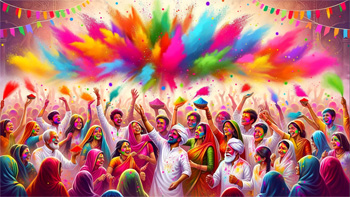

Holi, often called the 'Festival of Colors', is one of India's most vibrant and joyous celebrations. Occurring in spring, Holi is a festival of unity, laughter, and renewal, bringing together people from all walks of life and breaking social barriers. Rooted in Hindu mythology, Holi signifies not only the arrival of spring but also the victory of good over evil. It is a time for forgiveness, fresh beginnings, and reveling in life's vivid hues.
Mythological Significance of Holi
The origins of Holi are deeply woven into Hindu mythology, with multiple legends adding to its significance. One of the most well-known stories is that of the demon king Hiranyakashipu, his devout son Prahlad, and the demoness Holika. Despite his father’s opposition, Prahlad remained a steadfast devotee of Lord Vishnu. Holika, attempting to kill Prahlad by luring him into a fire, was instead consumed by the flames while he remained unharmed—symbolizing the triumph of righteousness. This event is commemorated as 'Holika Dahan'.
Another beloved tale revolves around Lord Krishna and Radha. Krishna, self-conscious about his dark complexion, playfully smeared colors on Radha's face, a gesture that evolved into the color-throwing tradition of Holi. This legend embodies the festival’s essence of love, joy, and playful spirit.
Pre-Holi Celebrations and Holika Dahan
The festivities begin on the eve of Holi with 'Holika Dahan', a ceremonial bonfire symbolizing the burning away of evil and negativity. People gather around the fire, chant prayers, and seek divine blessings for new beginnings. This event also marks the transition from winter to spring, celebrating renewal and purification. Many believe that circling the fire and offering grains or coconuts into the flames brings prosperity and protection.
The Day of Holi: A Carnival of Colors
On the day of Holi, streets transform into a lively spectacle of colors. People of all ages throw vibrant powders—'gulal' and 'abeer'—at one another, drenching friends and strangers alike in brilliant hues. Water balloons and pichkaris (water guns) add to the fun, creating an atmosphere of uninhibited joy. Social distinctions dissolve as people, regardless of caste, creed, or age, come together in a spirit of shared happiness. The laughter, music, and beats of traditional drums ('dhol') fill the air, making Holi a true celebration of life.
Traditional Foods and Delicacies of Holi
No Indian festival is complete without a feast, and Holi is no exception. The festival is synonymous with an array of delightful sweets and savories. 'Gujiya,' a deep-fried pastry filled with sweet khoya and dry fruits, is a signature Holi treat. Other favorites include 'malpua' (sweet pancakes), 'laddoos,' 'papri chaat,' and 'dahi bhalle.' Adding to the festivity is 'thandai,' a spiced, chilled milk-based drink, often infused with bhang (a cannabis-based ingredient) in some regions, further amplifying the exuberance of the day.
Cultural and Social Aspects of Holi
Holi holds a special place in Indian culture, promoting harmony, reconciliation, and joy. It is a time when past grievances are forgotten, friendships are rekindled, and communities come together in celebration. The festival underscores values of equality and unity, making it one of the most inclusive celebrations in India. In a land as diverse as India, Holi is a testament to the nation’s collective spirit, where joy and color erase boundaries.
Regional Variations of Holi Celebrations
While the spirit of Holi remains universal, different regions add their unique flavors to the celebration. In Mathura and Vrindavan, where Lord Krishna is revered, Holi festivities last for weeks, featuring grand processions and temple rituals. In Barsana, 'Lathmar Holi' sees women playfully striking men with sticks, recreating Krishna’s legendary teasing of Radha and the Gopis.
In West Bengal, Holi is known as 'Dol Jatra' or 'Dol Purnima', where idols of Krishna and Radha are placed on swings and worshipped amid singing and dancing. Punjab adds a martial twist with 'Hola Mohalla,' where Sikhs showcase horse-riding, sword-fighting, and mock battles alongside color celebrations. Each variation enriches the festival, reflecting the diverse cultural landscape of India.
Holi's Influence Beyond India
Holi’s infectious joy has transcended borders, captivating people worldwide. Many countries now host Holi-inspired festivals, bringing communities together in vibrant color-throwing events. From the United States to United Kingdom, Australia to Canada, Holi celebrations promote cultural exchange, friendship, and inclusivity. While some global celebrations retain religious aspects, many focus on the festival’s universal themes—spreading love, joy, and togetherness.
As Holi approaches, excitement fills the air in India and beyond. This festival, bursting with color, joy, and renewal, embodies the essence of Indian culture and the universal human spirit of celebration. More than just playing with colors, Holi is about embracing togetherness, love, and the rejuvenation of life itself. It remains one of the most cherished and eagerly awaited festivals, leaving lasting memories of happiness and unity.