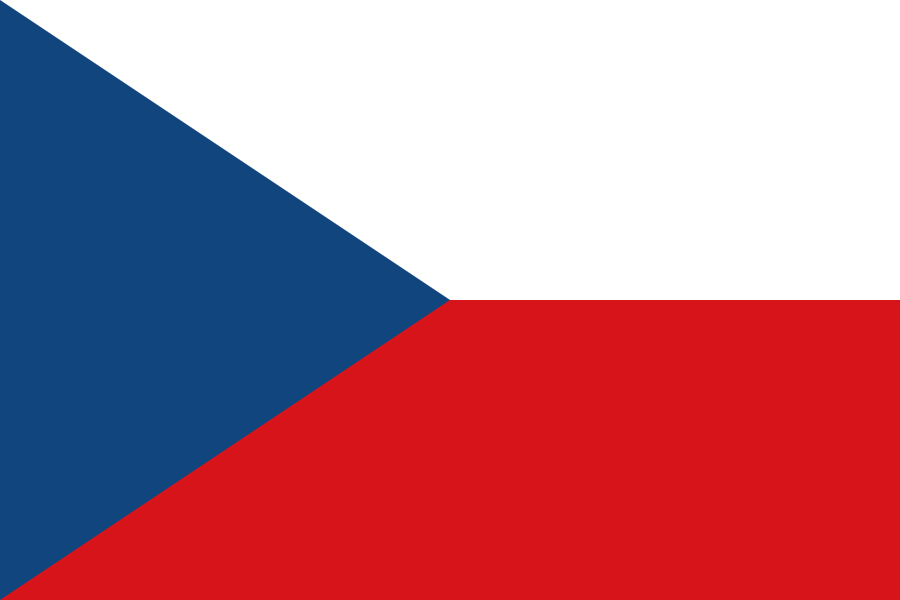
Czechoslovak Independence Day
Czechoslovak Independence Day, celebrated on October 28th, is a significant national holiday in the Czech Republic, marking the day in 1918 when Czechoslovakia declared its independence from the Austro-Hungarian Empire. This day stands as a cornerstone of Czech and Slovak history, embodying the aspirations, struggles, and triumphs of two nations on their path to sovereignty. The importance of this day goes beyond mere historical remembrance; it is a celebration of national identity, freedom, and the enduring spirit of the Czech and Slovak people.
The lead-up to independence was a tumultuous period characterized by World War I and the disintegration of the Austro-Hungarian Empire. Czech and Slovak leaders, intellectuals, and expatriates abroad, including the key figures Tomas Garrigue Masaryk, Milan Rastislav Štefánik, and Edvard Beneš, worked tirelessly to gain international support for their cause. Their efforts culminated in the Pittsburgh Agreement in May 1918, which was a decisive step towards the creation of an independent Czechoslovak state. When the opportunity arose in the waning days of the war, these visionaries seized the moment to declare the independence of Czechoslovakia, setting the stage for a new chapter in Central European history.
The Celebration of Czechoslovak Independence Day
Every year, Czechoslovak Independence Day is marked by a variety of celebrations across the Czech Republic. The day is filled with national pride and is a public holiday, allowing people from all walks of life to participate in the festivities. In the capital city of Prague and throughout the country, official ceremonies, military parades, and cultural events take center stage. One of the highlights is the laying of wreaths and flowers at the monuments of Tomas Garrigue Masaryk, the first president of Czechoslovakia, as a tribute to his and others' contributions to the nation's independence.
Beyond the official ceremonies, schools and communities engage in educational activities that delve into the history and significance of Czechoslovak Independence Day. Exhibitions, public lectures, and theatrical performances recount the story of the nation's struggle for independence, fostering a deeper understanding and appreciation among the younger generations. It is a day for Czechs and Slovaks to reflect on their shared history and to celebrate the values of democracy, freedom, and unity that their forebearers fought so hard to achieve.
The Historical Context and Significance
The declaration of independence in 1918 was a monumental event in Czech and Slovak history. It was the culmination of centuries of cultural and political development, during which the Czech and Slovak peoples maintained their distinct identities despite being part of larger empires. The new nation of Czechoslovakia emerged as a beacon of democracy and national self-determination in a region often dominated by larger powers. This independence was not only a political victory but also a significant cultural and social achievement, fostering a sense of unity and purpose among the Czech and Slovak peoples.
The significance of Czechoslovak Independence Day extends beyond the historical act of declaring independence. It symbolizes the resilience and determination of a nation to govern itself in the face of external pressures and challenges. Over the years, Czechoslovakia faced numerous trials, including the tragedy of the Munich Agreement in 1938, the sorrow of the Nazi occupation, the challenges of post-war reconstruction, and the oppression of the communist era. Through it all, the spirit of October 28, 1918, served as a guiding light, inspiring generations to strive for a free and democratic society.
Modern Celebrations and Reflections
In the modern Czech Republic, Czechoslovak Independence Day continues to be a day of pride and reflection. The dissolution of Czechoslovakia in 1993, which led to the creation of two independent states, the Czech Republic and Slovakia, has not diminished the importance of October 28. Instead, it has evolved to also celebrate the peaceful manner in which both nations have pursued their separate paths while maintaining a close and fraternal relationship. This unique aspect of Czech and Slovak history is a testament to the enduring legacy of their shared struggle for independence.
Today, Czechoslovak Independence Day also prompts discussions about the future of the Czech Republic and Slovakia in the European and global context. It is an opportunity for citizens to contemplate the achievements of their nations since independence and to consider the challenges and opportunities that lie ahead. As the world becomes increasingly interconnected, the values of democracy, freedom, and national self-determination that were so crucial in 1918 remain just as important today. The celebrations are a reminder of the need to safeguard these values and to work towards a future that honors the sacrifices of the past.
Cultural Impact and Legacy
The cultural impact of Czechoslovak Independence Day is profound, influencing not only the Czech Republic but also Slovakia. It is a day that unites people in a shared history and identity, celebrating the rich cultural heritage that both nations contribute to Europe and the world. Traditional music, dance, and cuisine play a significant role in the festivities, showcasing the diversity and creativity of Czech and Slovak cultures. These cultural expressions serve as a bridge between past and present, allowing new generations to connect with their heritage in meaningful ways.
The legacy of Czechoslovak Independence Day is visible in the continued pursuit of democratic ideals and the active participation of Czechs and Slovaks in the global community. The day serves as a reminder of the power of collective action and the importance of standing up for one's beliefs and values. As the Czech Republic and Slovakia navigate the complexities of the 21st century, the spirit of October 28, 1918, remains a source of inspiration and courage. It is a day to celebrate not only the past but also the promise of the future, reflecting the ongoing journey of two nations towards freedom, democracy, and prosperity.
In commemorating Czechoslovak Independence Day, the Czech Republic and Slovakia not only honor their shared history but also affirm their commitment to building a better world. This celebration is a powerful reminder of what can be achieved when people come together with a common vision and purpose. As we look back on the achievements of the past, we are also reminded of the responsibility to protect the gains of independence and to ensure that the values for which so many fought continue to guide us in the present and into the future. The story of Czechoslovak Independence Day is one of hope, resilience, and the enduring quest for freedom, offering lessons that resonate far beyond the borders of the Czech Republic and Slovakia.